


What is Bodyboarding? A Complete Beginner's Guide

Bodyboarding tips, sport history, and essential information for every bodyboarding beginner.
Have you ever seen someone lying on a board, gliding effortlessly across the waves? That is bodyboarding an exciting, accessible sport for all ages.
With summer approaching, it's common to see more people at the beach venturing into the ocean. If you aren't familiar with bodyboarding yet, this is the perfect time to understand how it works and how to start catching your first waves.
What is Bodyboarding?
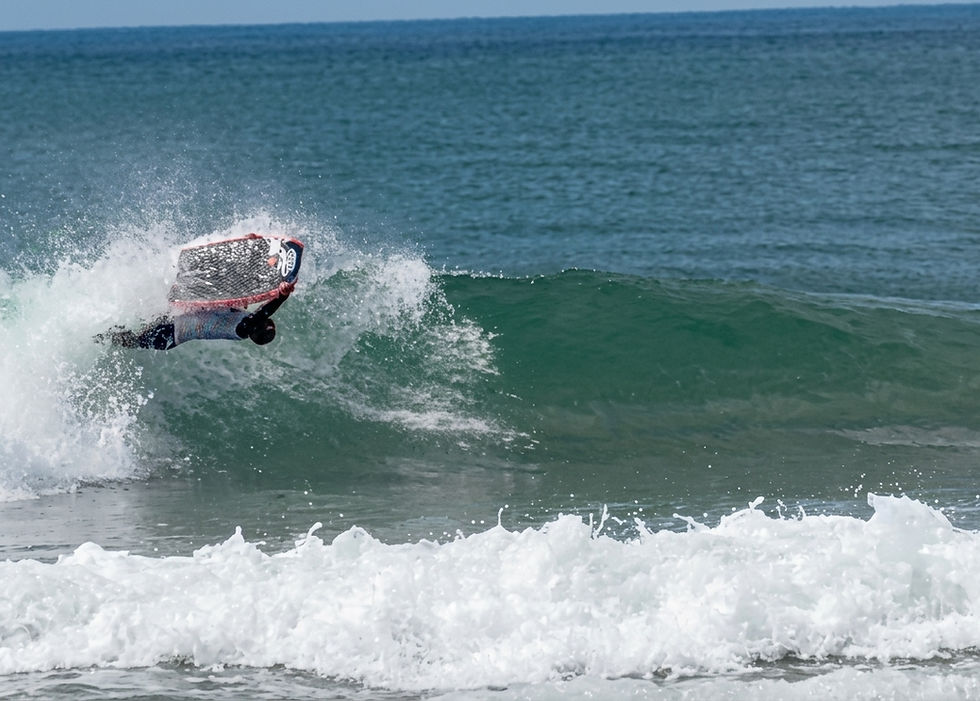
Bodyboarding is a water sport practiced in the ocean using a board that is smaller than a traditional surfboard, usually between 37 and 44 inches. The rider lies prone (on their stomach) and glides down the face of the wave toward the shore, harnessing the power of the ocean.

While many think it is just a "variation" of surfing, records show that Polynesians were practicing a form of the sport as early as the 15th century, riding smaller wooden planks. The modern format emerged in 1971 when Tom Morey, a surfer from the US, shaped a block of foam to create a smaller board in Hawaii. From there, bodyboarding established its own rules, advanced technology, and a thriving global competitive circuit.
How Does it Work?
The essence of bodyboarding lies in the board. Its size must be chosen based on the rider's height and weight to ensure proper buoyancy and comfort.
Propulsion: You use your arms and swim fins (flippers) to gain the necessary speed to catch the wave.
Intuitive Learning: Because you are closer to the water and have a lower center of gravity, it is much easier for beginners to learn compared to surfing. Even without experience, you can start catching waves and having fun almost immediately.
How to Choose the Right Bodyboard
Choosing the right equipment is vital for your progression. A general rule of thumb is that the board should reach the height of your belly button when standing on the ground in front of you.
Since we use the imperial system in Canada for height, refer to the table below to find your ideal fit:
Size Chart: Board x Height x Weight
Board Size | Height (Feet/Inches) | Weight (lbs / kg) |
38" | 4'5" to 5'1" | 77–84 lbs (35–38 kg) |
40" | 5'2" to 5'6" | 104–159 lbs (47–72 kg) |
41" | 5'3" to 5'8" | 121–187 lbs (55–85 kg) |
42" | 5'6" to 6'0" | 143–209 lbs (65–95 kg) |
43" | 5'8" to 6'4" | 154–220 lbs (70–100 kg) |
44" | 6'6" to 6'9" | 220–275 lbs (100–125 kg) |
Pro Tip: If you are between two sizes, go with the larger board if you plan to ride smaller waves or need extra float. Choose the smaller board if you want more maneuverability in hollow, powerful surf.
Comments